


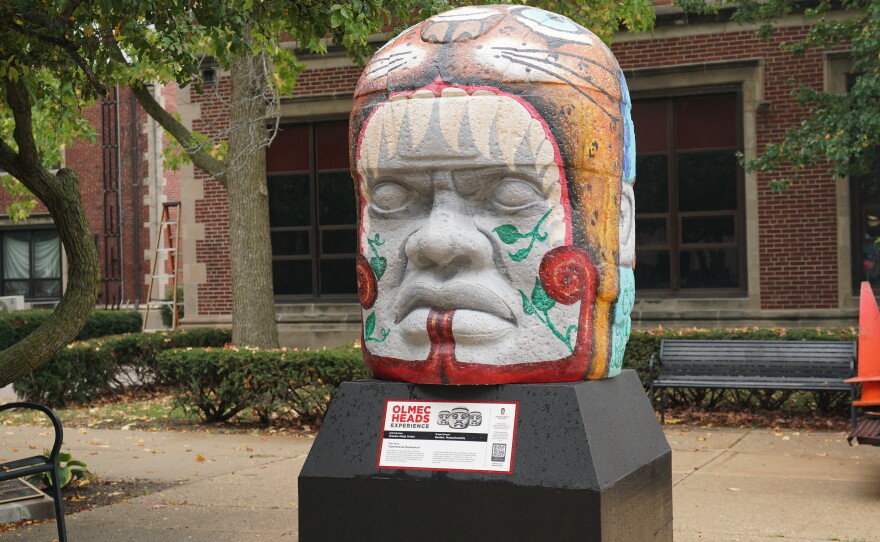
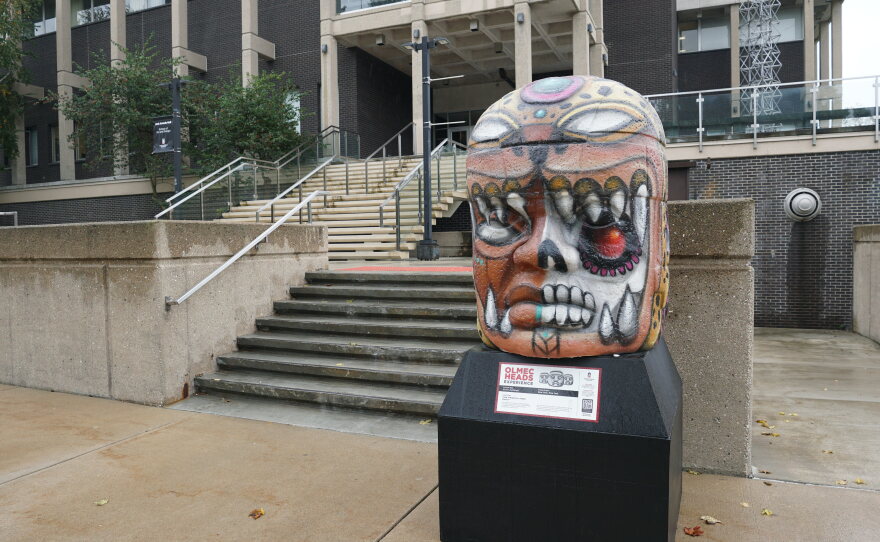
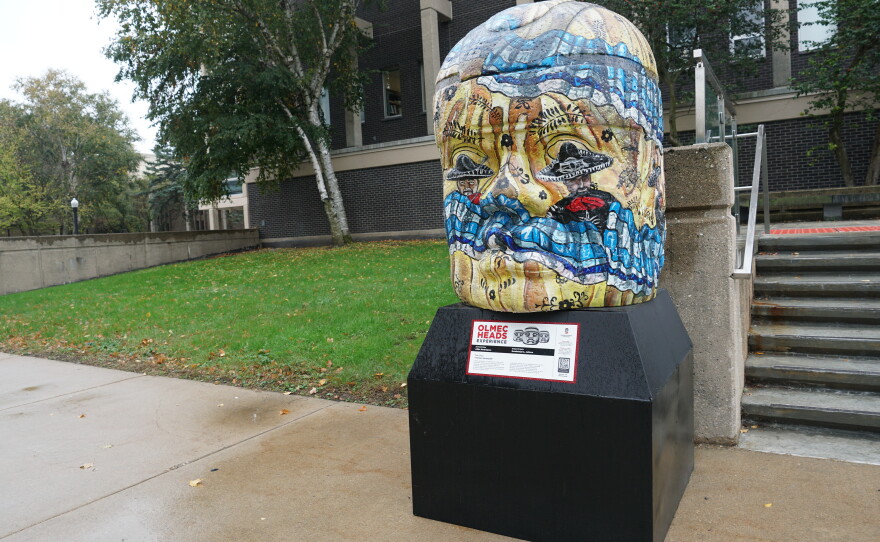
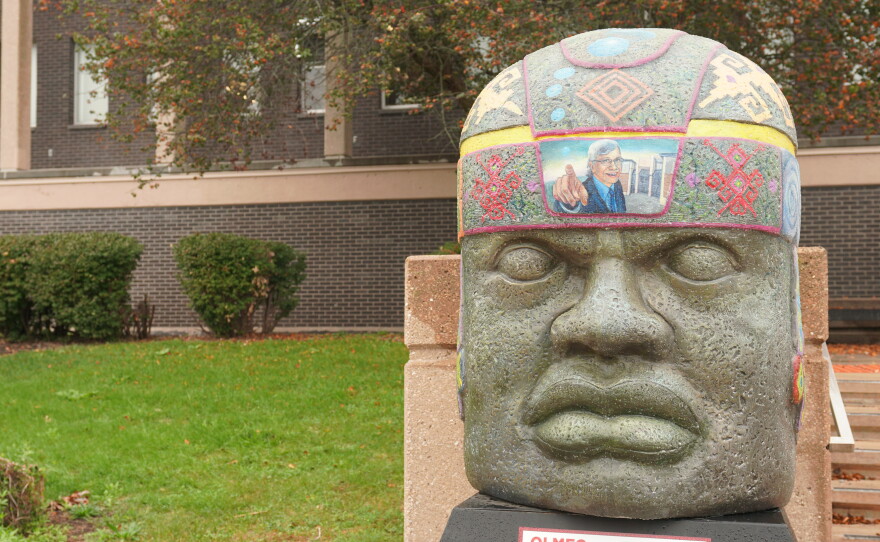
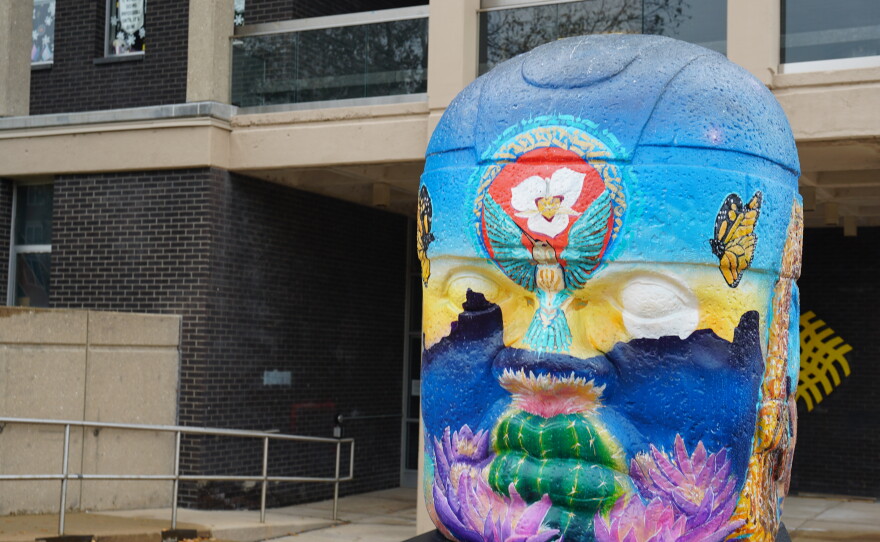
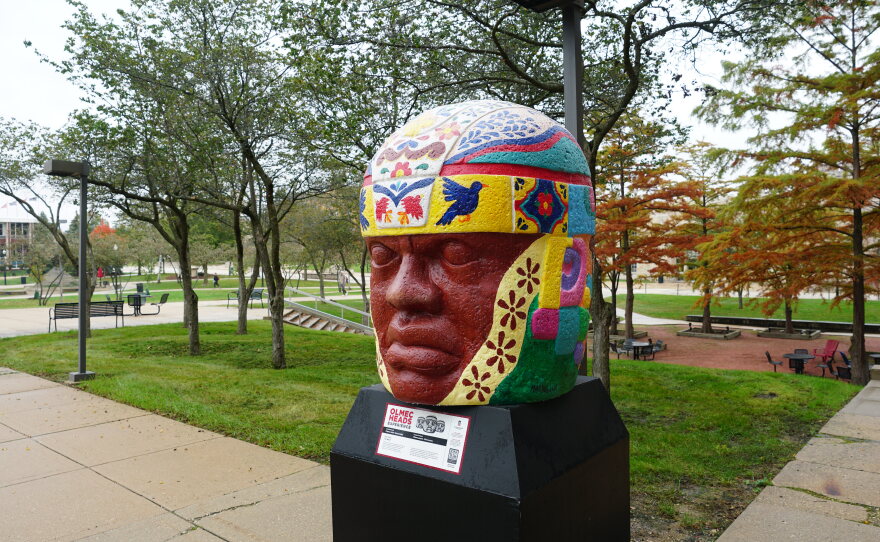
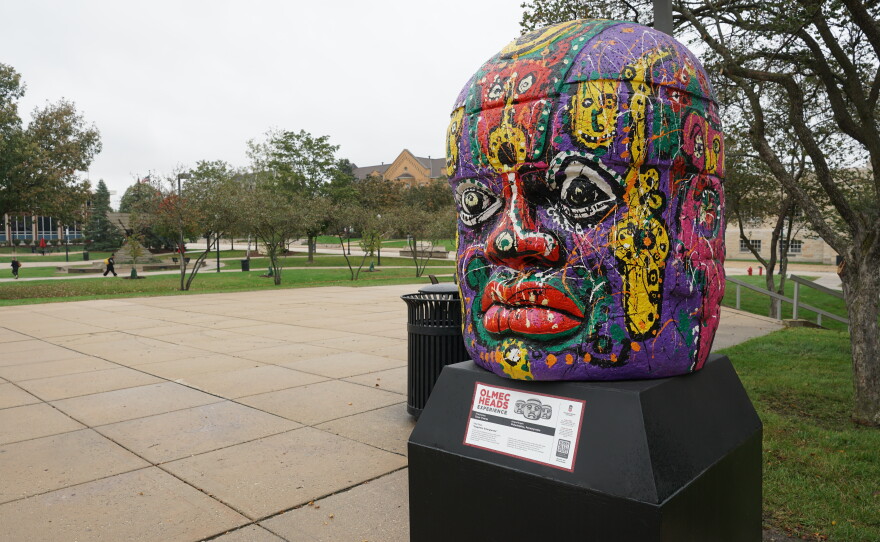
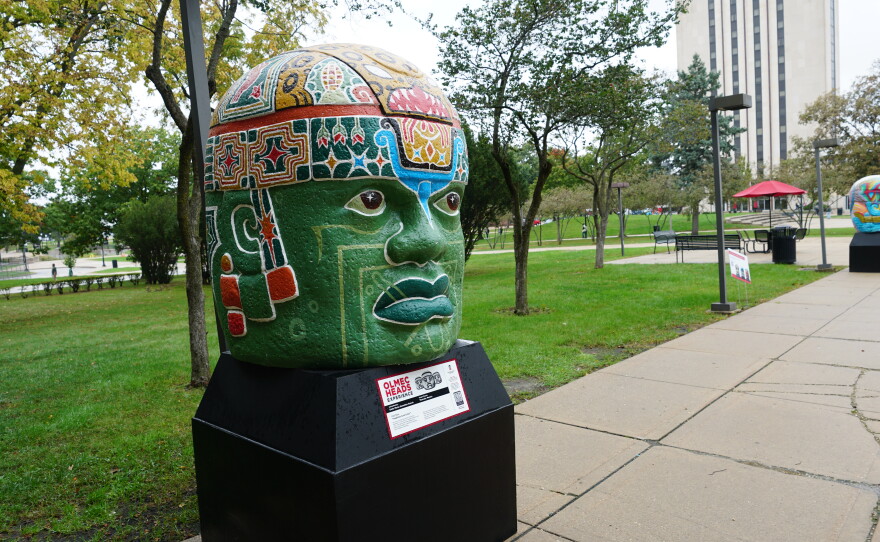
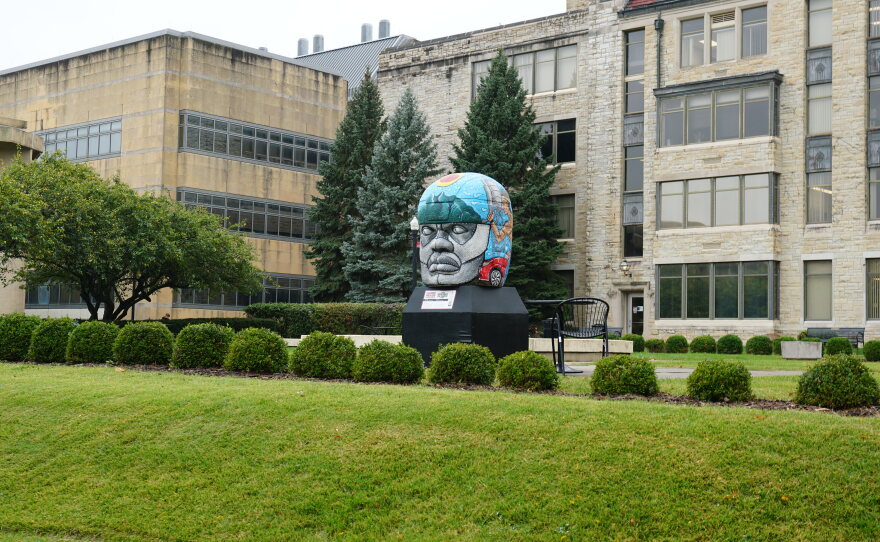
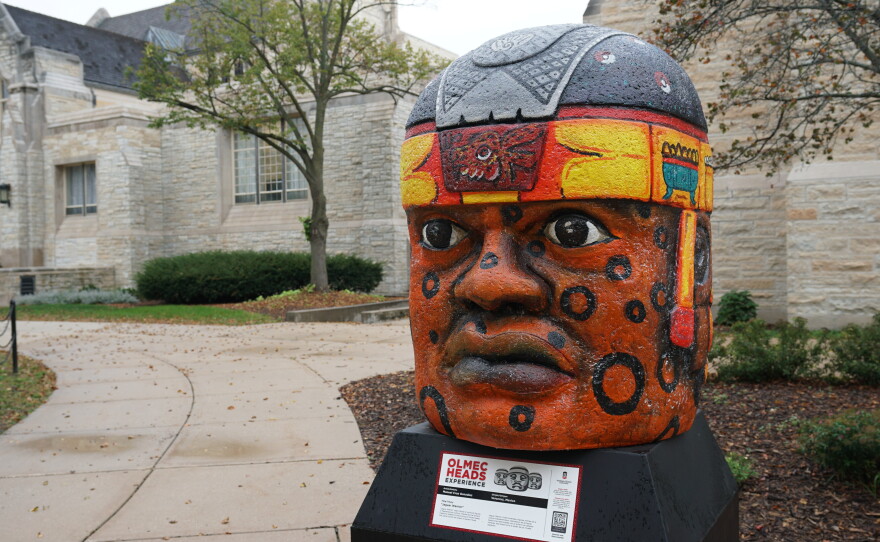
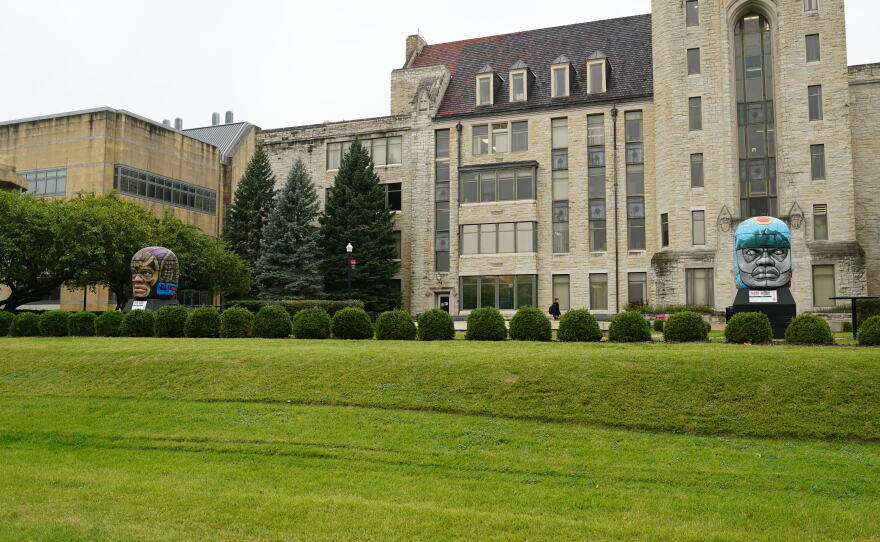
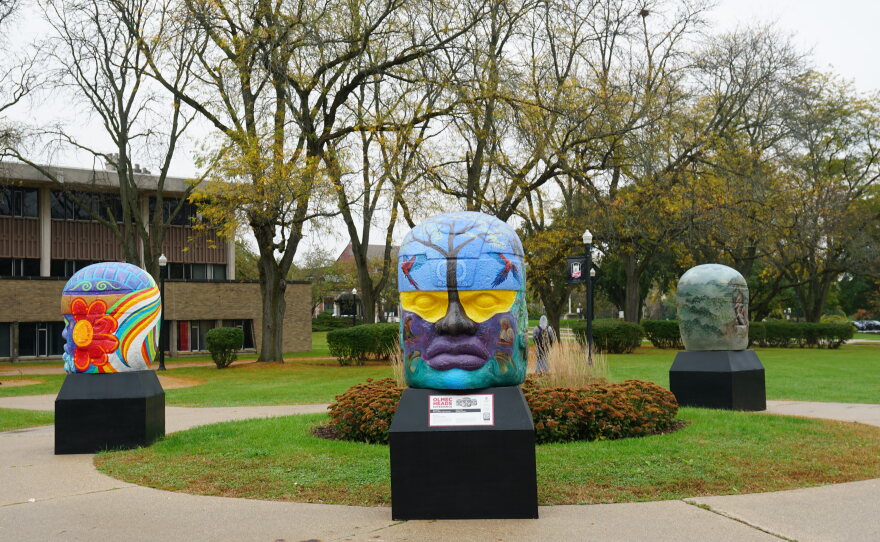
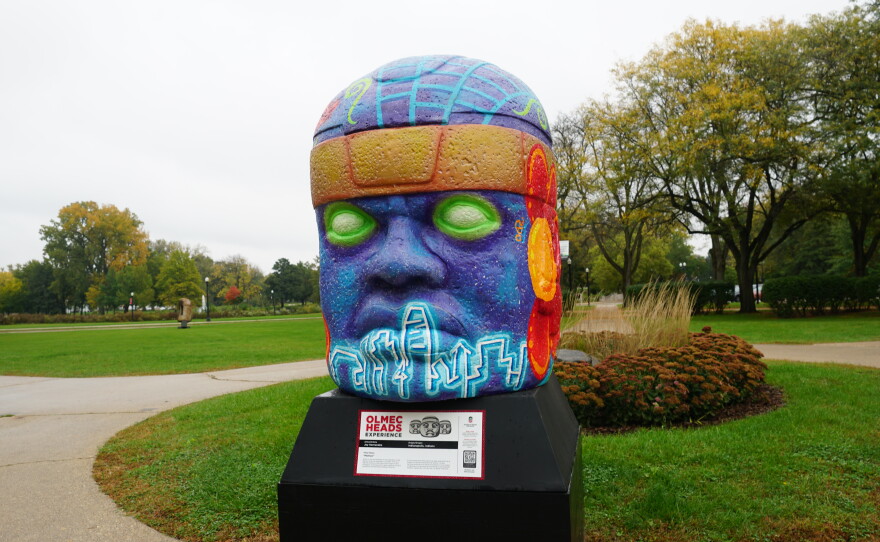
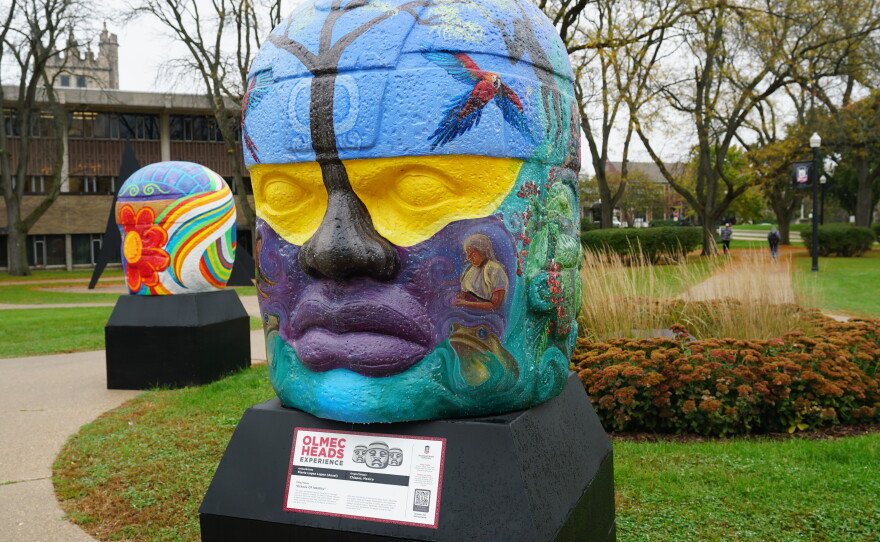
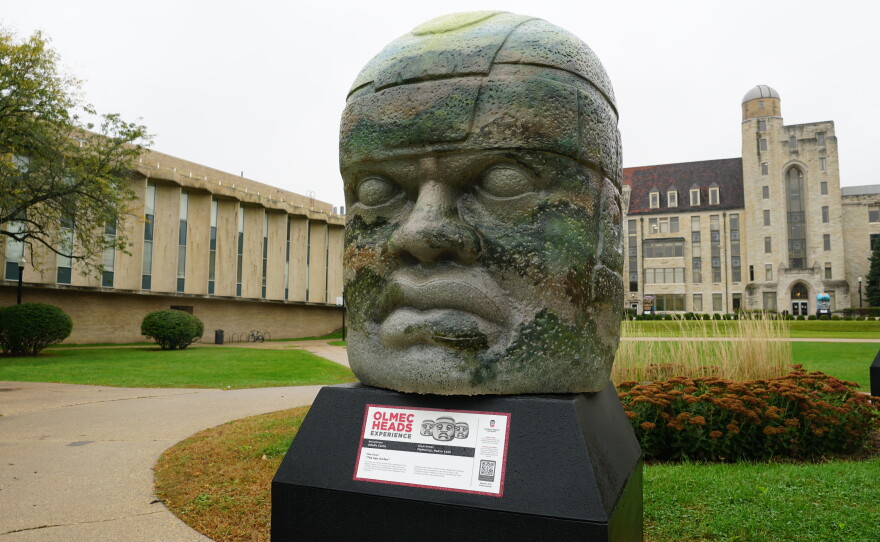
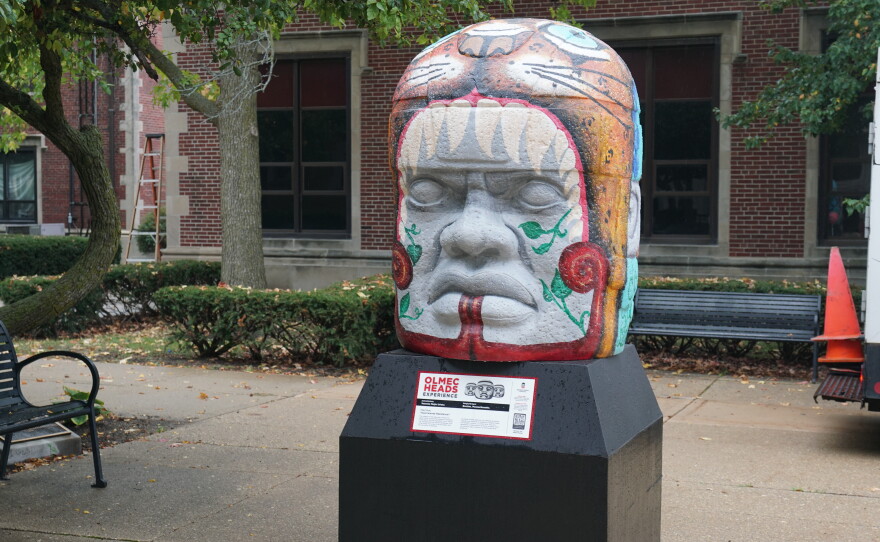
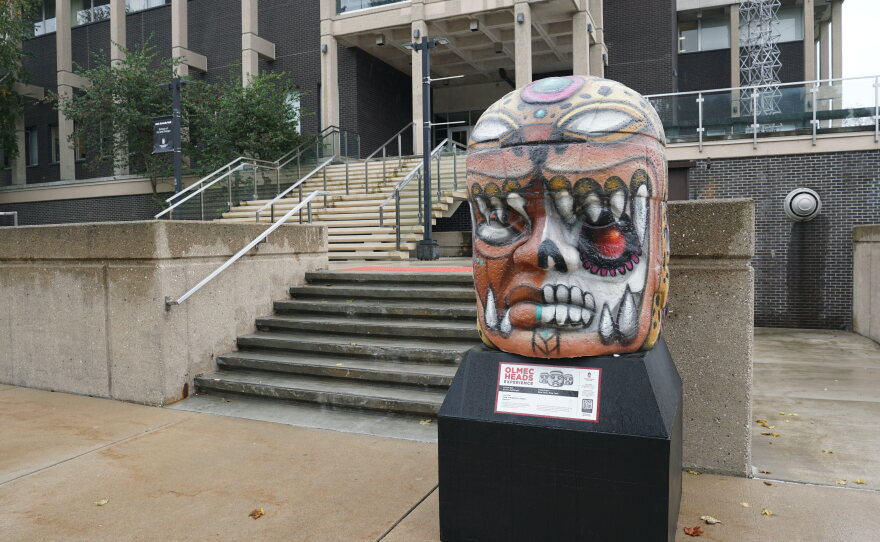
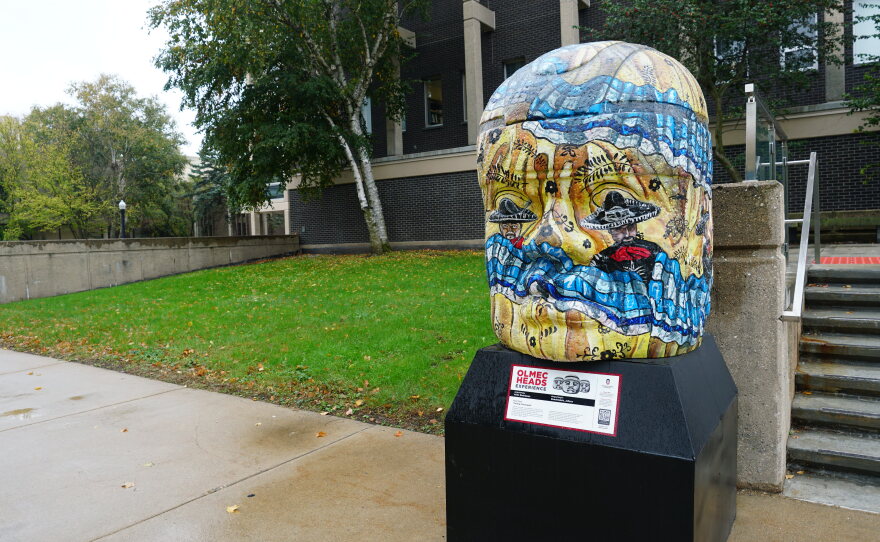
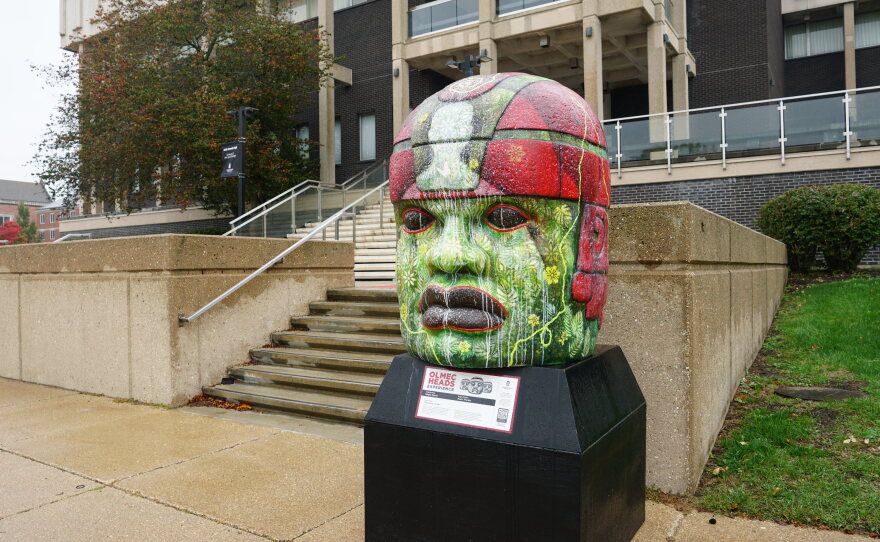
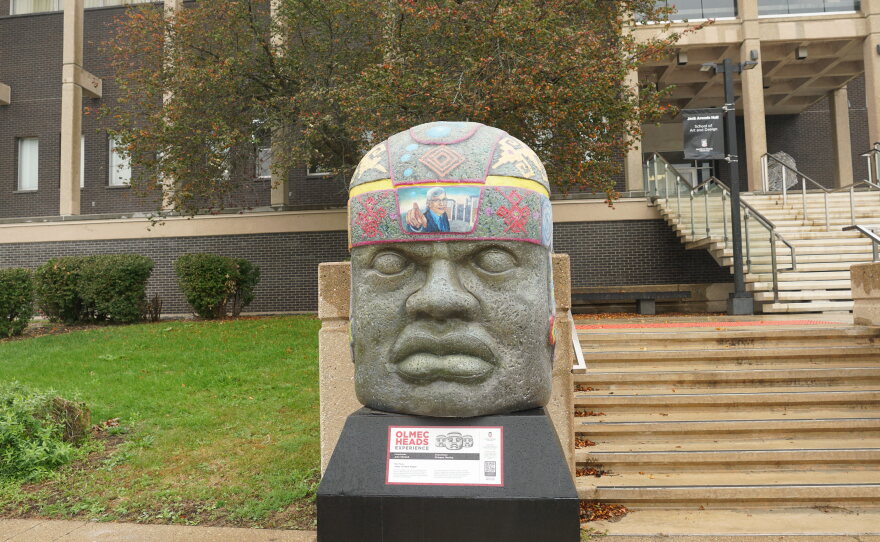
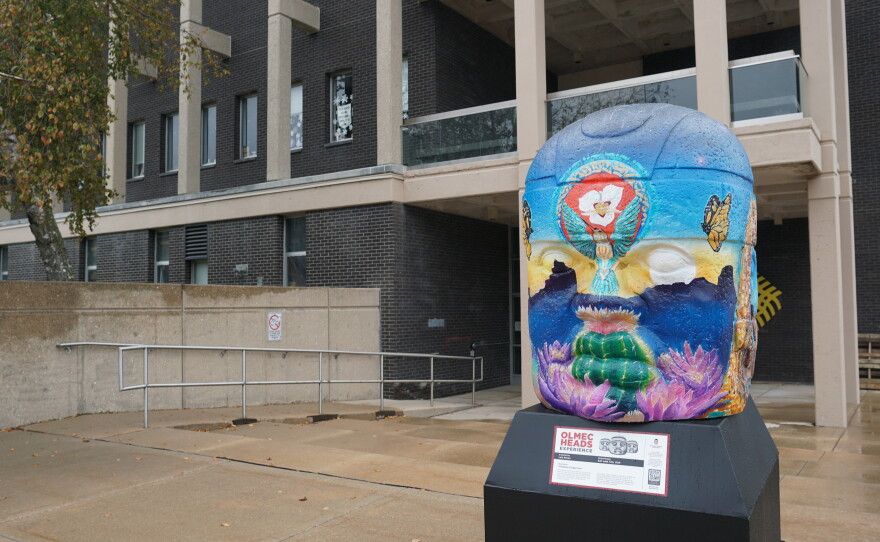
NIU students and faculty have been noticing massive heads popping up from the ground. No, it’s not their imaginations, it’s part of a new large-scale exhibit across campus.
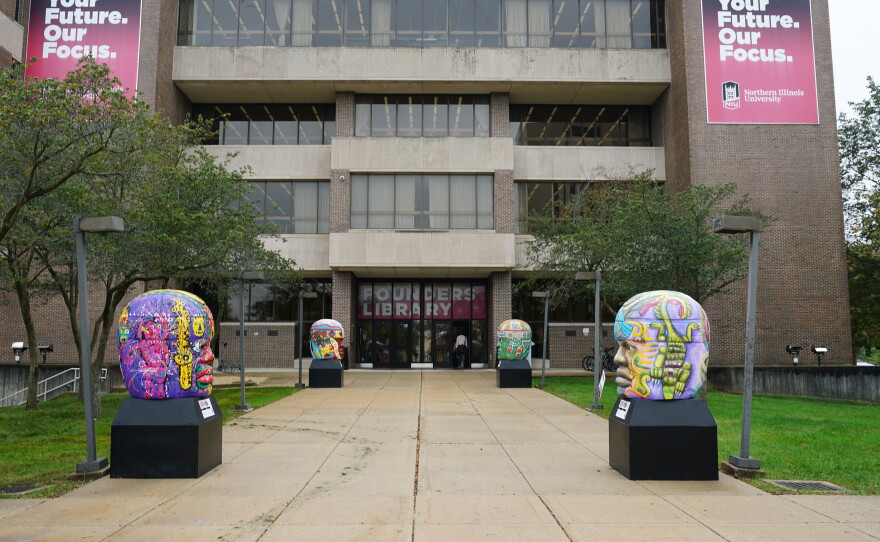
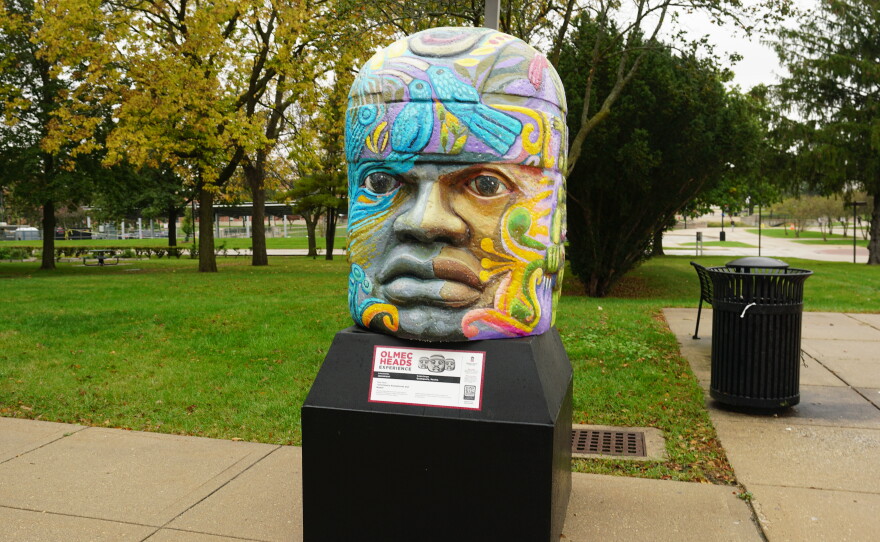
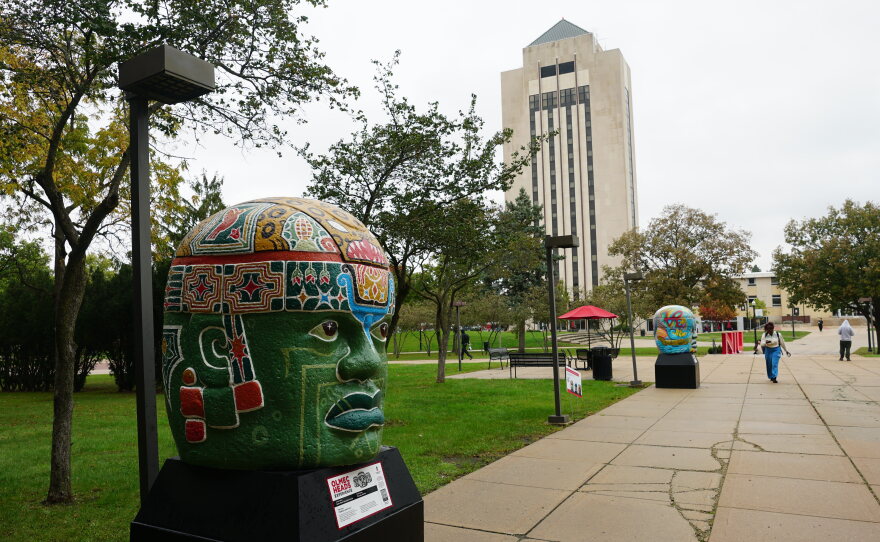
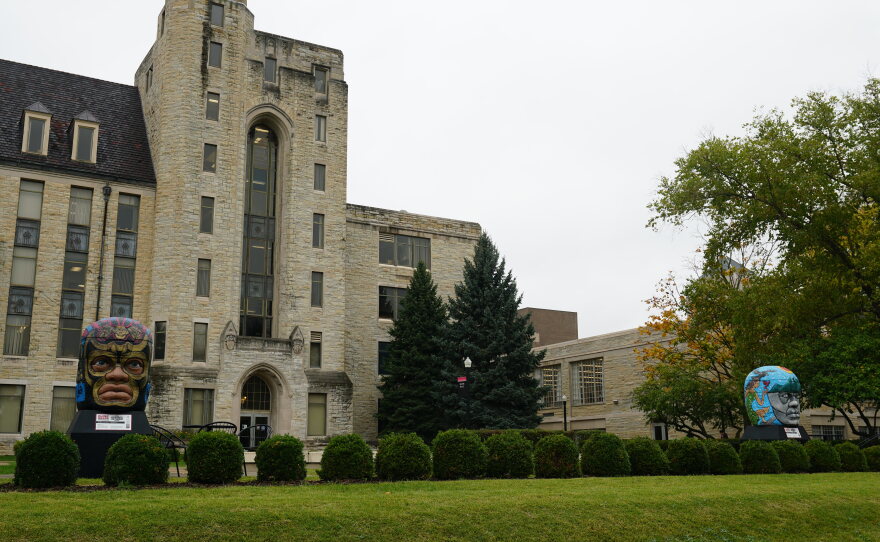
On Sept. 16, the Olmec Head Experience opened its doors at the NIU Art Museum in Altgeld Hall. In addition to the nine painted Olmec heads in the museum, there are 16 more open air statues outside of Founders Library, Davis Hall, Altgeld Hall and the Visual Arts Building Jack Arends.
The statues represent an ancient civilization of Mesoamerica, the Olmecs. Each one was painted by a different artist that lives in Mexico or the U.S. This indoor/outdoor exposition can be viewed until Dec. 12.
When Fred D. Barnhart, dean of NIU libraries, was contacted by Fernando Ramirez, director of DuPage County Mexican Cultural Center with the offer of an exhibit for fall 2026, Barnhart was enthusiastic about bringing another art event to campus. In 2024 both had worked together to bring the Alebrijes sculptures to NIU.
While Ramirez had been involved in the Alebrijes project, Carlos Tortolero, president and founder of Chicago’s National Museum of Mexican Art, expressed an interest in the Olmecs, one that Ramírez shared. Eventually, in coordination with Carlos Luna who recruited the artists from Mexico, the Olmec Head Experience was created.
Back at NIU, Barnhart worked with Jessica Labatte, director of the School of Art and Design, to bring this touring exhibit to NIU. After installations at the College of DuPage and West Chicago, these colossal heads have arrived on the NIU campus.
Who were the Olmecs?
The Olmecs were one of the first big civilizations in Mesoamerica before the Mayas and the Aztecs. Approximately between 1200 to 400 BCE, they were located mainly in southern Mexico in the states of Veracruz and Tabasco.
Their influence extended to regions like Guatemala, Belize and Honduras. Famous for their colossal head statues, the Olmecs are regarded as the mother culture of the pre-Columbian civilizations of Mesoamerica because they introduced ideas, artistic styles and practices that were adopted by later civilizations.
Among their contributions are advances in mathematics and astronomy which allowed them to develop a calendar and a hieroglyphic writing system. They cultivated cacao and rubber, and are credited with inventing the first ball game, later adopted by other Mesoamerican civilizations.
Visiting the Art on Campus
The NIU Art Museum is located on the first floor of Altgeld Hall and is open Wednesdays noon-3 p.m., Thursdays 2 p.m. - 8 p.m., Fridays from noon-6 p.m. and Saturdays from 10-1 p.m. Museum admission is free and open to the public.
The statues outside the museum can be visited any time. Visitors interested in an art walk can start at Founders Library and end at the Jack Arends Visual Arts Building.

After admiring the four statues at the entrance of Founders, the art walk continues toward Normal Road. After passing between Swen Parson Hall and Davis Hall, visitors will see two more statues near the east facade of Davis as well as three more in the quad. A left turn will take you to Altgeld Hall where two more statues are at each end of the building. Altgeld Hall is also the location of the NIU Art Museum where nine more heads are on exhibit. The walk continues east on College Avenue until Gilbert. A left turn will take the visitor to the Jack Arends Art Building after crossing the parking lot. The last five statues are placed around the Art Building on the south, west and north facades.
Public transportation to Altgeld Hall is available on the 2R and 2L bus routes. Public parking is available in the visitor parking lot next to Founders Library. After 4 p.m. and on the weekends, parking is free. At other times, the pay parking kiosks must be used.
As part of the exposition, each statue has a QR code. It is possible to take a selfie with the statues and send the photo to the museum for an opportunity to enter a sweepstakes and win a prize.
- This article was produced by students Kiwane Brooks-Keith, Jamie Cabrera, Patricio Cabrera, Kimmy Castillo, Liliana Corona, Michael Geshkewich, Lizbeth Guadarrama, Diego Iñiguez, Evelyn Lopez-Cabanas, Selena Ramos, Judith Varela as part of a project with Prof. Frances Jaeger's FLSP302 class in the Department of World Languages at NIU.
