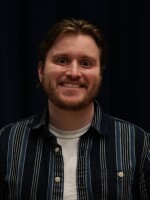
Studying in the United States used to be a no-brainer for Indian students like Riyan, who just earned a master's degree from Northern Illinois University: good universities, bright job prospects, whether you wanted to work in the U.S. after graduation or take your talents back home.
"But now I think everyone is thinking a lot about what their options are and where they can go," he said. "A lot of students from back home are considering Europe. They're considering China."
Riyan wanted to use only his first name out of fear the administration could target his visa.
International student enrollment in the U.S. is down 20% this spring compared to last. NIU's international enrollment is down nearly 30% since Trump's election in 2024, according to university data obtained by WNIJ.
Since the president retook office, Stephanie Brown says constant rule changes have led to a sense of uncertainty and anxiety for students. She's the director of International Student and Scholar Services at NIU.
"I've been doing this work for 14 years," she said, "and this is not something that I've ever had to navigate."
The Trump administration revoked more than 8,000 student visas last year, including several at NIU that were later reinstated.
A third-year doctoral student spoke to us anonymously, nervous his visa could be threatened for speaking out. We'll call him Farid.
"It was difficult for a long time for some citizens of some specific countries," he said, "but now it has become difficult for mostly all the international students."
Of course, it is still more challenging for students from particular countries. Late last year, the president effectively banned visas for students from 39 countries. That included Nigeria, one of the top 10 nations sending students to the U.S.
Brown says because of those country-specific impacts, her office is doing more individual advising than ever.
"Because there's so many caveats in place," said Brown, "it's much harder to do group sessions on different topics."
More visas are now subject to additional review called administrative processing. Brown says some students can't get visas in time, so her team works with them to start programs virtually or defer admission.
And students already in the U.S. are having their visas "continuously vetted."
Riyan, the student from India, is currently applying for Optional Practical Training, which allows students to work temporarily in the U.S. after graduation for 12 months, with an extension for STEM fields. He says that process is also taking longer.
"Two years ago, it was around two to three months," said Riyan. "And now, I applied for my OPT back in December, and I still didn't get it. I'm still waiting on it."
The longer he waits, the less he can actually use OPT and the fewer opportunities available to him.
Farid, the doctoral student, says research funding cuts and work restrictions make it harder for international students to find jobs.
"A highly qualified international student coming over here and completing a PhD. He just wants to have a postdoc and go back to his country," said Farid. "Even in that ideal scenario, he is not getting the opportunity to explore the higher technological skills that he wants to achieve."
He says he doesn't believe students like him are competing with or taking jobs from domestic students.
"It will backfire," Farid said, "in probably 5-10 years."
He says it'll diminish university research and that enrollment will continue falling. International student tuition is nearly three times higher than in-state, so schools will have fewer resources without them.
Brown says the international office is always scanning the horizon for the next big change.
"What we're looking ahead to," she said, "is the proposed changes to the 'duration-of-status' rule, which allows international students to be here for the duration of their academic program."
The new rule would limit students to four years before they have to renew, which she says could be especially complicated for doctoral programs that often take six or seven years.
Riyan says all of this weighs on students, especially since many have been away from their family for years. So when it starts to feel like the country doesn't want you, at some point they start questioning if it's worth it.
"For me, from an outsider's perspective," he said, "it just looks like they're doing everything they can to make lives difficult for international students. And I hope it will stop soon."
He says the U.S. built trust over decades, but now it's broken. Even with a new administration or new rules, it would take a long time to repair, especially since there are other options now.
Brown says the number of international applications has dropped, but where it has really dropped is visa issuance — students actually getting to U.S. schools. If student interest starts plummeting, enrollment could tumble further. Right now, staff members are focused on helping students who are still interested.
"U.S. higher education infrastructure is strong," she said. "We're world leaders for a reason, and so my sincerest hope is that the interest will bounce back faster than maybe we think it will."
But the increased burden and anxiety those students are feeling is certainly not helping.
Copy Edited by Eryn Lent