(This interview was edited for clarity.)
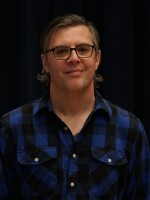
Jason Cregier (JC): It has been a busy week for news in Rockford, so we called on Kevin Haas of the Rock River Current to discuss some of the top stories of the week.
Kevin, thanks for joining us.
Kevin Haas (KH): Jason, always happy to be here.
JC: The future of the 163-year-old Briggs Mansion on E. State St. in Rockford has been hotly debated. UW Health SwedishAmerican purchased the property and wants to raze it. Meanwhile, historic preservationists want the building to stay.
Kevin, what are the respective arguments from both parties as to what should happen with the Briggs Mansion?
KH: SwedishAmerican has highlighted some of the facts around it. The property sat on the market for almost 11 years. Zero buyers came forward, and SwedishAmerican sees this as a future growth opportunity on the land across the street from where its hospital is located.
In their mind, this building was not wanted, and they are stepping in to secure land that they think will help their future.
The arguments against demolishing the Briggs Mansion are obvious as well. It is one of the oldest structures in the city's history. It was built during the Civil War, and its builder, C.C. Briggs, was a prominent abolitionist.
There is also some discussion that the Briggs Mansion was a stop on the Underground Railroad. I have not seen any definitive proof of that, but there has been conjecture about it for years.
Aside from its architectural significance, the mansion may also have historical significance.
People want to save the mansion and its stories.
JC: When I read your story, the Underground Railroad portion grabbed me. The Underground Railroad mention is from a 1992 essay, correct?
KH: There had been talk about the link years before that. The documentation was done by a local historian named Martha Mangas, who used to do history essays titled "Nuggets of History" for the Rockford Historical Society.
In one such essay, Mangas took a deep look at the Briggs Mansion. She discussed areas of the mansion that could have been used to hide formerly enslaved people who were escaping.
She also noted, however, that there had not been proof, in part, because the Underground Railroad was meant to be secret. Places that have been proven to be part of the Underground Railroad have run into similar issues in the past.
JC: I noted from your work that historical preservationists are using the Briggs Mansion as a case study. Even if the result is not what they want it, is this being viewed as a learning experience for preservation in Rockford?
KH: Absolutely. Ald. Mark Bonne has been one of the Rockford City Council's biggest advocates for saving these structures. Despite Rockford's success with projects like the former Amerock Building becoming a hotel or the Water Power Lofts, there have also been major failures in preservation.
The Old Elks Lodge was torn down. The old church chancery was demolished. And now the Briggs Mansion may suffer the same fate.
They hope this instance with the Briggs Mansion can be a wake-up call to be more proactive in preservation efforts, identify structures on the horizon that may be in danger of demolition, and start efforts earlier to avoid fighting at the 11th hour once demolition permits have been issued.
JC: Speaking of structures on the horizon, data centers are popping up across the country.
Earlier this week 13th Ward Ald. Tamir Bell proposed extensive safeguard protocols to protect Rockfords economy and environment in the event of data center construction.
It feels like what the city of Aurora proposed recently. What are some of the details of Rockford's plan, Kevin?
KH: Yeah, I will not get into specifics. If you would like to see the proposals, they are linked through rockrivercurrent.com. What it does is set standards for how much water may be used, how much noise the facility can create, and how much energy it can consume. It also requires that a portion of the energy come from renewable sources such as wind and solar.
The proposal also sets requirements that the data centers retain a minimum number of jobs. That has been a concern of promised jobs from data centers that do not materialize to offset the economic benefits.
Bell's proposal also features an item that is at odds with the city of Rockford. His proposal states that you cannot provide tax increment financing benefits, or TIF funds, for a data center to come to Rockford.
That is already in the works, behind the scenes, at Rockford City Hall. The city of Rockford has started the process of creating a new TIF district in that area. There is an existing TIF district now, but by creating a new district it extends benefits for more years to a potential developer.
And Monarch Energy, the data center developer, has been advertising that it is in a TIF district. So this puts the city and Bell at odds over Bell's proposal.
It seems like it is beating a dead horse here, but you and I talked about this a few weeks ago. Alex Gary of the Beloit Daily News and I discussed this. WNIJ environmental reporter Bear Savage covered data center news in DeKalb.
JC: The "unknown" around data centers seems to be the largest sticking point of concern for communities. And protections and safeguards are also based on "unknowns." People are asking, "what do we really know?"
KH: That is a great point. In some ways we are lucky here in Rockford. We have had the opportunity to see data centers be built elsewhere across the country. We have seen some of the issues and drawbacks that have come from it. We know that we need to look at potential protection.
Even Bell wants his proposal revisited in two years because technology moves so quickly that what is appropriate today may not be appropriate shortly after it goes into play. There is that "fear of the unknown" and if you know what you are doing is right with technology always changing.
JC: Wow. I am not envious of you, having to cover data center stories on a regular basis.
Thanks for joining us and sharing those bullet points.
That is Kevin Haas, managing editor of the Rock River Current. You may read Kevin's work at rockrivercurrent.com.
Kevin, thanks for being with us.
KH: Thank you.
Copy Edited by Eryn Lent