
Environmental Reporting at WNIJ
The Mississippi River Basin spans nearly half of the continental United States. Millions of residents rely on the river system for drinking water, commerce and recreation.
More than 90% of America’s agricultural exports are grown in the Mississippi River Basin, including more than three-quarters of the world’s exports in feed grains, and most of the country’s livestock. More than 70% of nitrate pollution in the Mississippi River comes from agriculture, which harms human health and aquatic life and contributes to the “dead zone” in the Gulf of Mexico. As the impacts of climate change become more severe, residents can expect more extreme weather, including flooding.
By making resources available on this beat, we support more complete coverage of these critical topics. As our reporters build deeper knowledge, they tap into a network of newsrooms, experts, and support that will help them tell more equitable, impactful and interconnected stories.
Harvest Public Media reports on food systems, agriculture and rural issues through a collaborative network of reporters and partner stations throughout the Midwest and Plains. Our goal is to provide in-depth and unbiased reporting on complex issues for a broad, diverse audience, often connecting the Heartland to the rest of the country. Primary topics include, but are not limited to, agribusiness, biofuels, climate change, farming and ranching, food safety, rural life and public policy.

Below you will find reporting from reporters across our collaborations.
Locally, Bear Savage reports on clean air, water, and agricultural systems in northern Illinois for WNIJ, part of the Mississippi River Basin Project and Harvest Public Media. They recently graduated from the Medill School of Journalism at Northwestern University. Bear was awarded the Pulitzer Center Campus Consortium Fellowship, where they reported on landscape-scale ecological restoration in England and its effects on local farmers. They studied ecology at the University of Vermont as an undergraduate.
Bear focuses on access and policy related to clean air, water and agricultural systems for northern Illinois residents. This includes storytelling that gives voice traditionally underserved communities and the impact of climate change on local communities. The beat is a solutions driven approach to reporting related to efforts to improve the quality of rivers and groundwater, policies and processes in agricultural practices and food systems, and overall access to healthy living.
-
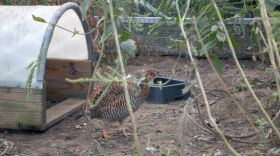 The Trump administration is narrowing longstanding interpretations of what it means to harm plants and animals protected under the Endangered Species Act. Conservation experts say the change will pose greater challenges for already-vulnerable populations, and several groups have sued the administration.
 -
 Schools in the U.S. serve almost 30 million lunches every day. But rising food costs, regulations and cuts to food assistance mean school kitchens have to do more with less.
 -
 Farmers are cutting less hay this year due to persistent drought, the soaring price of fuel and a new pest. That’s driving up the cost for livestock producers, who often rely on hay to feed their animals during the winter.
 -
 Researchers recently traced the birthplace of the world’s dominant cotton species to the Yucatán Peninsula in Mexico. Their sleuthing also uncovered a treasure trove of genetic diversity in wild populations, which could eventually make the crop more resilient.
 -
 Sargento has developed a natural American cheese, hoping to give consumers classic melt without added ingredients.
 -
 Biden-era changes to the Clean Air Act would have tightened regulations for industrial sites, but the Trump administration has given exemptions to hundreds of facilities. People living near the sites are concerned about air quality and their well-being.
 -
 People have harvested wild foods for millennia, but learning how to do it today is harder, because fewer people have those skills. These groups are teaching people to eat "field to fork" again.
 -
 Across the central U.S., more communities are passing ordinances to regulate renewable infrastructure development. A University of Missouri study examines the economic impact of renewable energy in rural areas.
 -
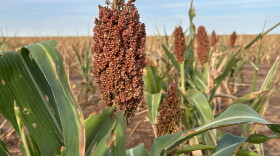 More farmers are showing interest in sorghum, a drought-tolerant grain. The crop is poised to expand in the U.S. – especially if Americans start consuming it.
 -
 Harvest season is nearing for many farmers. But the railroads that transport their harvested grain have raised their shipping costs with record-high diesel prices. That could mean lower grain prices for growers.


